Common Mistakes to Avoid: Using Brief Advice, Pro Bono, or Limited-Scope Legal Help
People often lose time not because they did nothing, but because they did the wrong task first. The goal of this guide is to help you protect the next important step while you look for qualified help.
This guide focuses on limited legal help and is written for people who cannot afford full representation but may benefit from a shorter consultation, document review, or help with one part of a case. It is designed to help you prepare, find reliable information, and make better use of legal-help resources. It does not tell you what result you should seek in a specific case.
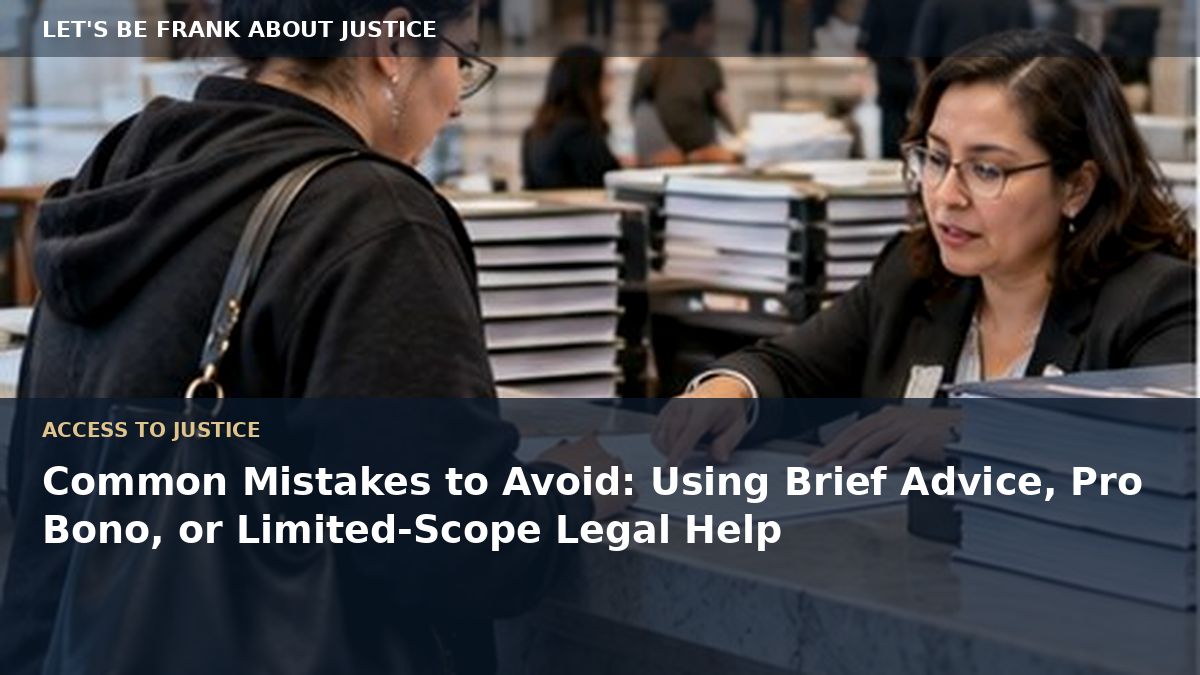
The mistakes that most often make a legal problem harder
Many legal problems become more difficult because of delay, lost records, unclear communication, or reliance on information that does not apply to the right jurisdiction.
- assuming a consultation means the lawyer represents you for the whole case
- failing to calendar deadlines because you are waiting for advice
- bringing every document instead of the most relevant ones
- not asking who will communicate with the court
- signing an engagement letter without understanding its scope
Do not trade urgency for panic
A short deadline requires fast action, but not random action. Confirm the court, agency, or organization involved, identify the date, and use an official contact method before sending money, signing a document, or disclosing sensitive information.
Keep a record of what you did
Save filings, receipts, screenshots of confirmation pages, referral emails, and notes of important calls. A simple log can prevent repeated work and help a lawyer understand what happened before they became involved.
Correct mistakes early
If you filed the wrong form, missed an attachment, sent something to the wrong address, or misunderstood a deadline, do not hide the mistake. Contact the court, agency, or a qualified legal professional promptly to ask what options may exist.
Know the situations where self-help may not be enough
General information is useful, but some problems become high stakes quickly.
- a hearing or filing deadline is near
- you are considering settlement or waiver language
- the case has become more complex than you can safely handle alone
A 30-minute action plan for this issue
- Write down the next deadline, hearing, appointment, or safety concern that applies to your situation.
- Identify the specific task where legal judgment would help most.
- Put these two items where you can reach them quickly: court papers; draft forms or agreements.
- Write this question at the top of your notes: What part of the case can you help with?
- Choose one starting resource today: ABA Free Legal Answers in participating jurisdictions.
Useful starting points
- ABA Free Legal Answers in participating jurisdictions
- local bar lawyer-referral program
- legal aid clinics
- court self-help center