Plain Language Can Make Legal Information More Usable
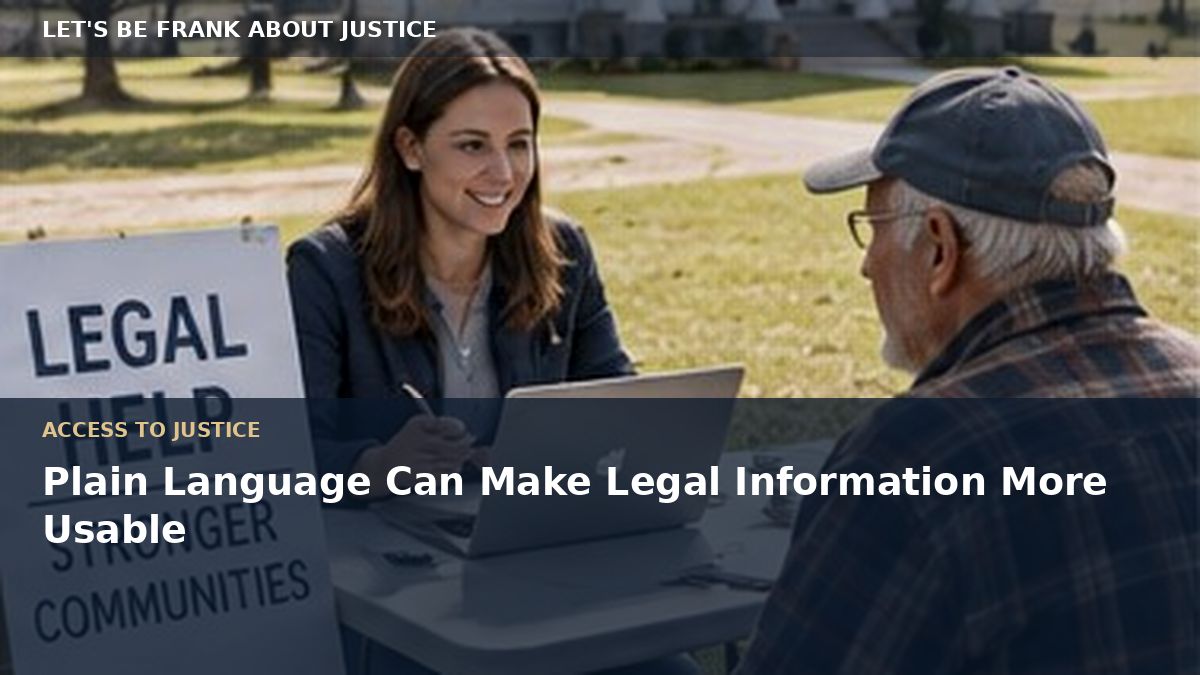
Plain Language Can Make Legal Information More Usable is a practical access-to-justice topic because small procedural barriers can determine whether a person can understand a problem, reach the right service, or complete the next step on…
Why this topic matters
Plain Language Can Make Legal Information More Usable is a practical access-to-justice topic because small procedural barriers can determine whether a person can understand a problem, reach the right service, or complete the next step on time. The goal of this guide is to organize the issue into concrete questions that legal organizations, students, courts and community partners can use when reviewing their own processes. It provides general information rather than advice for any specific legal matter.
Write for the reader’s task
Legal information can be technically accurate and still be difficult to use. People often arrive at a legal website under time pressure and need to know what to do next. A strong process should make responsibilities visible, preserve important records, and give users a clear way to ask what happens next.
Define legal terms when they first appear
Plain language does not mean removing important legal distinctions. It means presenting those distinctions in shorter sentences, familiar words and a visible structure. A strong process should make responsibilities visible, preserve important records, and give users a clear way to ask what happens next.
Use steps, examples and headings
Checklists and examples are especially useful when they show the order of actions and the documents a person may need. A strong process should make responsibilities visible, preserve important records, and give users a clear way to ask what happens next.
Test the page with real users
Usability testing with community members can reveal confusing labels and assumptions that are invisible to people who work in the legal system every day. A strong process should make responsibilities visible, preserve important records, and give users a clear way to ask what happens next.
A practical review checklist
When reviewing a program or personal plan, write down the task, the deadline, the person or organization responsible for the next step, the documents required, and the backup method if the first channel fails. Check whether the information is understandable on a phone as well as a computer, whether accessibility or language support is available, and whether contact details are current. For legal questions that depend on jurisdiction or individual facts, consult an appropriate lawyer or authoritative local source.
Questions to ask before you rely on a process
Is the information current? Does it identify the correct court, agency or service area? Are deadlines and eligibility rules stated clearly? Can a user save or print the information? Is there a human contact for questions the website cannot answer? These questions help separate a useful legal-information system from a page that merely contains a large amount of text.