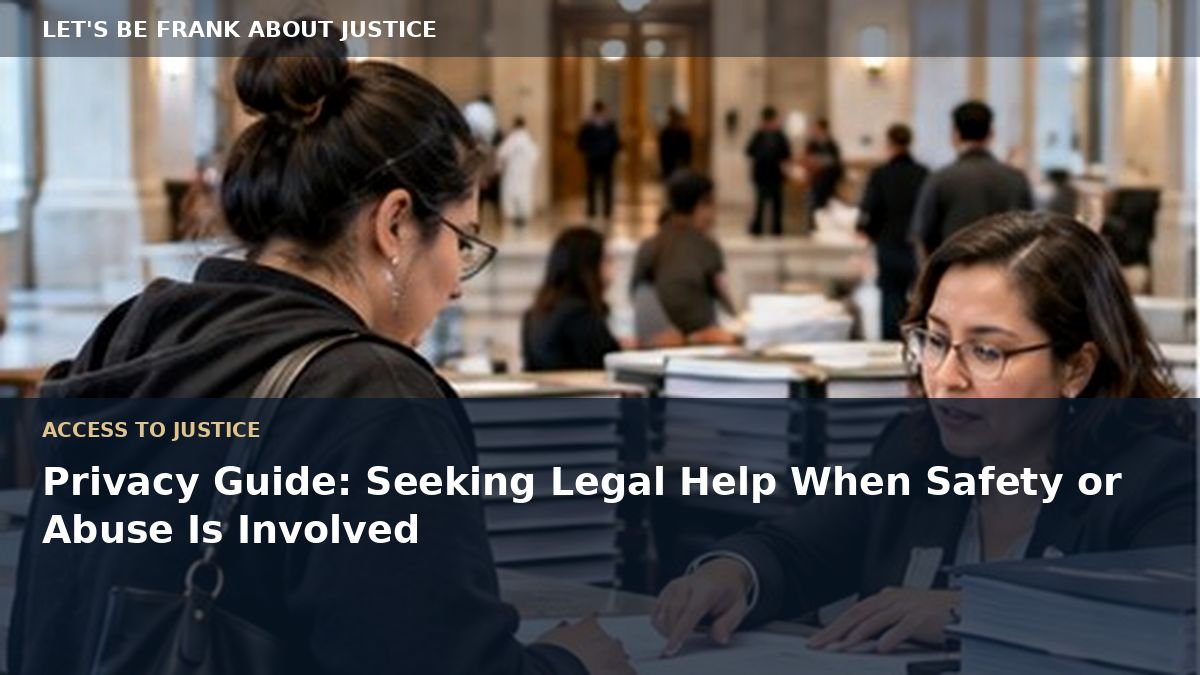
Privacy Guide: Seeking Legal Help When Safety or Abuse Is Involved
Legal problems become harder when information, documents, and deadlines are scattered. A short plan can turn an overwhelming situation into a sequence of manageable tasks.
This guide focuses on a safety or abuse-related legal problem and is written for people seeking information about protective orders, family safety, housing, benefits, or legal help where abuse, stalking, or coercive control may be involved. It is designed to help you prepare, find reliable information, and make better use of legal-help resources. It does not tell you what result you should seek in a specific case.
Share the minimum necessary information
Before sending documents, ask why the recipient needs them and whether less information will do. Remove unnecessary account numbers, Social Security numbers, medical details, or children’s information when appropriate and allowed.
Verify the recipient independently
Use the official court, agency, law-firm, or legal-aid website to confirm an email address or upload portal. Do not rely only on a link in an unexpected message.
Use safer communication habits
Use a private email account when possible, enable multi-factor authentication, lock your phone, and avoid discussing sensitive legal facts over public social-media threads.
Think about device monitoring
If the issue involves abuse, stalking, or coercive control, technology safety may be part of physical safety. Use a safer device or speak with an advocate before changing settings that could alert another person.
Know what to do after a privacy mistake
If you sent a document to the wrong person, clicked a suspicious link, or disclosed identity information to a scammer, act quickly: notify the legitimate organization, change affected passwords, preserve the suspicious message, and seek appropriate consumer or safety help.
A 30-minute action plan for this issue
- Write down the next deadline, hearing, appointment, or safety concern that applies to your situation.
- If you are in immediate danger, contact local emergency services or a trusted crisis resource.
- Put these two items where you can reach them quickly: court papers or police reports if available; safe copies of threatening messages or photos if they can be stored securely.
- Write this question at the top of your notes: Is there an emergency or temporary protective-order process?
- Choose one starting resource today: local domestic-violence hotline or advocacy program.
Useful starting points
- local domestic-violence hotline or advocacy program
- court protective-order office
- legal aid
- emergency services when there is immediate danger