Document Checklist: Finding Legal Help in a Rural Area
A good self-help resource should reduce uncertainty, not create false confidence. This guide focuses on practical preparation, questions to ask, and the limits of general information.
This guide focuses on rural legal access and is written for people who live far from courthouses, lawyers, legal-aid offices, or reliable broadband. It is designed to help you prepare, find reliable information, and make better use of legal-help resources. It does not tell you what result you should seek in a specific case.
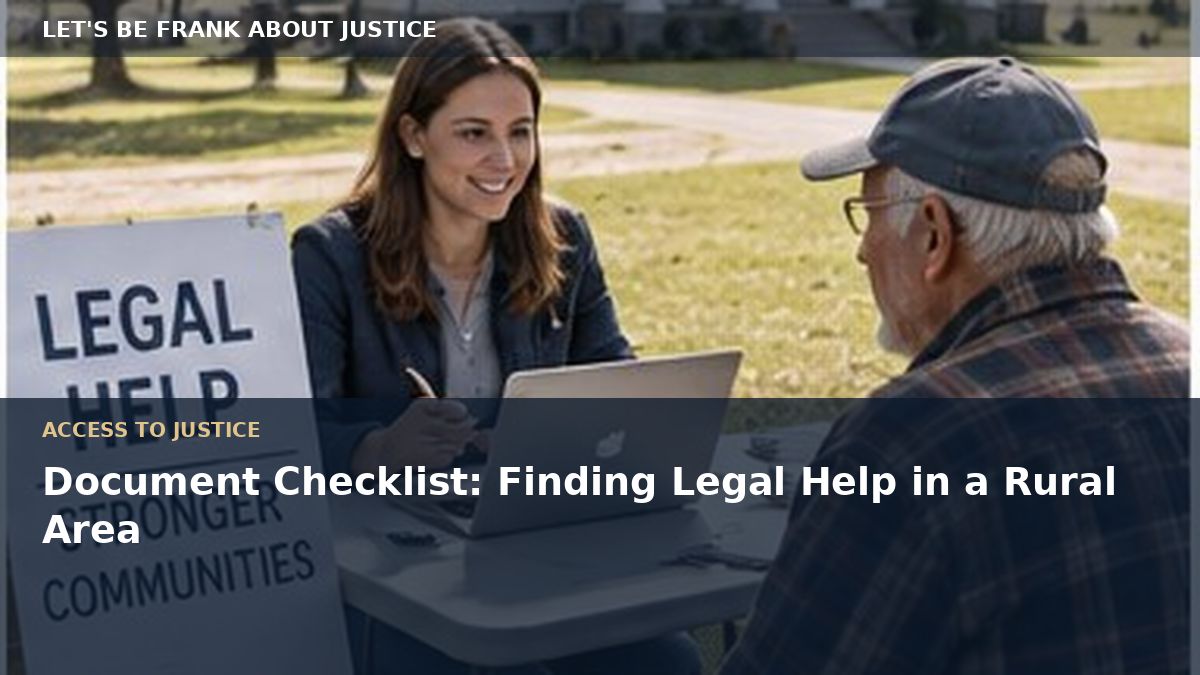
Build a small working file, not a paper mountain
The best document set is one you can actually use. Put the current court or agency papers first, followed by a short timeline and the records that support the main facts.
- court notices and deadlines
- proof of county or residence if eligibility depends on location
- documents related to the dispute
- travel and connectivity limitations that affect appointments
- a list of nearby libraries or community sites you can reach
Label documents so another person can understand them
Use filenames or sticky notes that include the date and a short description, such as “2026-08-14 landlord notice” or “2026-09-02 benefits denial.” Avoid renaming files so vaguely that you cannot find them under pressure.
Keep originals safe
Unless a court or professional specifically asks for an original, work from copies. Keep proof of what you submitted, when you submitted it, and how it was delivered. If you upload online, save the confirmation page or receipt.
Protect sensitive information
Do not send full identity, medical, financial, or family records to an unverified email address. Ask what information is actually needed and whether the recipient has a secure upload method.
Use the document set to ask better questions
Once your documents are organized, write down the questions they raise.
- Do you serve my county?
- Can the intake or appointment happen by phone?
- Is there a traveling clinic or local partner site?
- Can documents be submitted electronically or by mail?
- What should I do if I cannot travel to the courthouse?
A 30-minute action plan for this issue
- Write down the next deadline, hearing, appointment, or safety concern that applies to your situation.
- Start with statewide or regional legal-aid programs instead of limiting your search to your town.
- Put these two items where you can reach them quickly: court notices and deadlines; proof of county or residence if eligibility depends on location.
- Write this question at the top of your notes: Do you serve my county?
- Choose one starting resource today: LSC legal-aid locator.
Useful starting points
- LSC legal-aid locator
- LawHelp.org
- state court self-help resources
- local library or community partner