Practical First Steps: Preparing to Represent Yourself in Civil Court
When a legal problem lands in your life, the most useful first step is usually not learning every rule. It is identifying the next decision, the deadline that cannot be missed, and the document that explains what is happening.
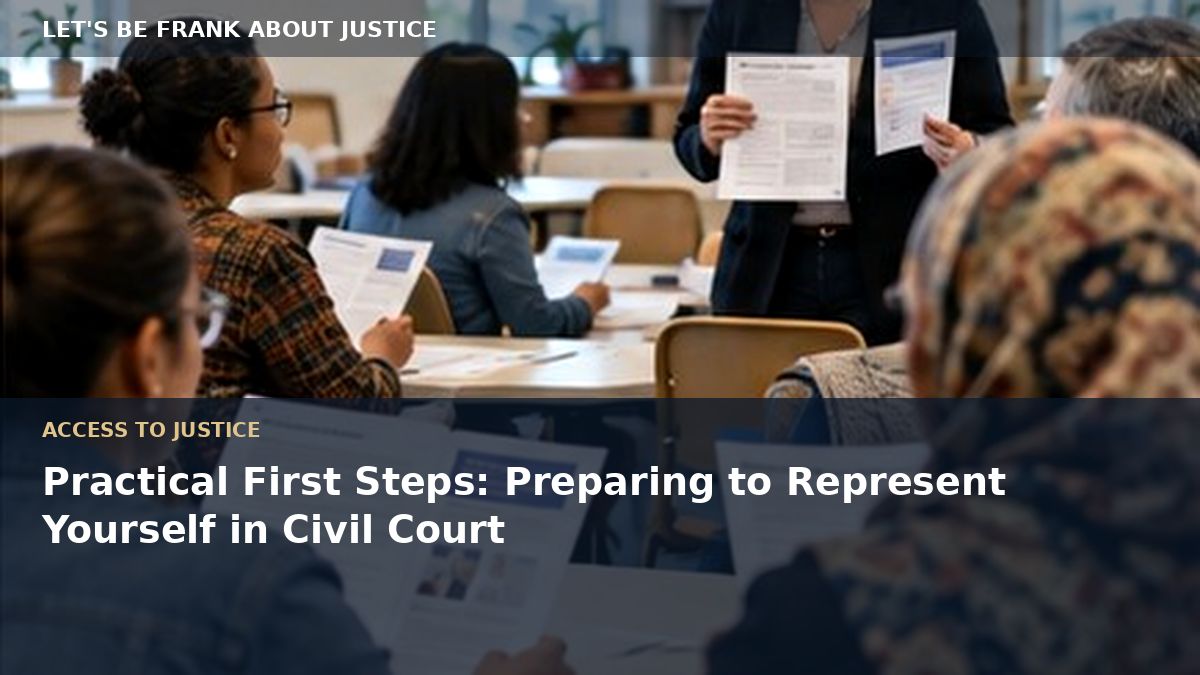
This guide focuses on self-representation in civil court and is written for people who may need to handle part or all of a civil case without full representation. It is designed to help you prepare, find reliable information, and make better use of legal-help resources. It does not tell you what result you should seek in a specific case.
Start by protecting the next deadline
You do not need to understand an entire area of law before taking a sensible first step. You do need to know what is urgent, what should be preserved, and where official information can be checked.
This article is for people who may need to handle part or all of a civil case without full representation. Before researching every possible issue, identify the next event you cannot undo: a response date, hearing, termination date, payment deadline, or safety concern.
- Learn the basic type of case and what the court can decide.
- Read the current rules, forms, and self-help instructions for your court.
- Make a timeline of what happened and identify the documents that support each important fact.
Make a one-page problem summary
Write the names of the people or organizations involved, the date the problem began, the most important deadline, what has already happened, and what outcome you are trying to reach. Keep it factual. This summary will make calls with legal aid, court staff, or a lawyer much more efficient.
- One sentence describing the legal problem
- The next date or deadline
- The document that created the problem
- What you have already done
- The help you are asking for
Gather only the documents that explain the issue
You do not need to scan every paper you own. Start with the documents most likely to show what happened and what must happen next.
- court papers and prior orders
- chronology of key events
- organized exhibits
- witness contact information if relevant
- notes of the questions you need answered
Know what to ask
Use a short question list so you leave a call or appointment knowing your next step.
- What must I prove or respond to?
- What evidence can the court consider?
- What are the filing and service rules?
- What happens at the next hearing?
If the first path fails
Closed intake, long wait times, and referrals are common. If one provider cannot help, ask whether it can name another organization, a self-help center, a brief-advice clinic, or a limited-scope lawyer. Protect deadlines while you keep looking.
A 30-minute action plan for this issue
- Write down the next deadline, hearing, appointment, or safety concern that applies to your situation.
- Learn the basic type of case and what the court can decide.
- Put these two items where you can reach them quickly: court papers and prior orders; chronology of key events.
- Write this question at the top of your notes: What must I prove or respond to?
- Choose one starting resource today: court self-help center.
Useful starting points
- court self-help center
- NCSC self-represented litigant resources
- local legal aid
- limited-scope lawyer directories where available