When to Seek Urgent Help: Completing Court Forms More Carefully
You do not need to understand an entire area of law before taking a sensible first step. You do need to know what is urgent, what should be preserved, and where official information can be checked.
This guide focuses on completing court forms and is written for people filling out court or agency forms without a lawyer. It is designed to help you prepare, find reliable information, and make better use of legal-help resources. It does not tell you what result you should seek in a specific case.
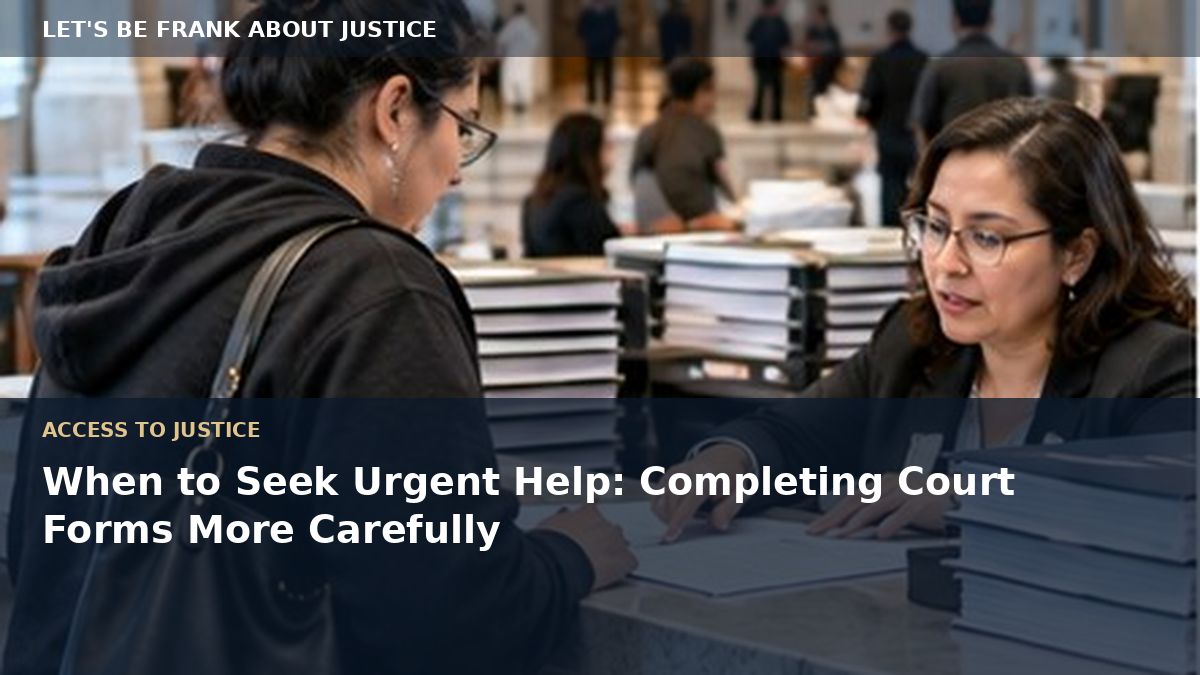
Some situations should move to the front of the line
Not every legal problem is an emergency, but some facts make delay especially risky. The point is not to panic—it is to recognize when general reading should give way to direct contact with a court, legal-aid program, emergency service, or licensed lawyer.
- the form is tied to a near deadline
- you are being asked to swear to facts you do not understand
- the form may waive rights or create a binding agreement
Lead with the deadline or safety issue
When you call for help, state the date, type of court paper, and urgent risk before giving the full history. That allows intake staff to triage the problem more accurately.
Use official contact information
Urgency makes people more vulnerable to scams. Verify court, agency, and legal-provider phone numbers independently before paying money or sending sensitive documents.
Preserve what you can
Save notices, orders, messages, photos, payment records, and confirmation numbers that may help explain the urgent issue. Do not alter evidence or confront another person if doing so could create danger.
When safety is involved
If there is immediate danger, contact local emergency services or an appropriate crisis resource. If device monitoring is a concern, use a safer communication method when possible.
A 30-minute action plan for this issue
- Write down the next deadline, hearing, appointment, or safety concern that applies to your situation.
- Make sure you have the current form for the correct court and case type.
- Put these two items where you can reach them quickly: the current official form and instructions; existing case caption and case number.
- Write this question at the top of your notes: Is this the correct form for my court and case type?
- Choose one starting resource today: official court forms library.
Useful starting points
- official court forms library
- court self-help center
- legal aid
- law library or court navigator program