How to Prepare: Completing Court Forms More Carefully
People often lose time not because they did nothing, but because they did the wrong task first. The goal of this guide is to help you protect the next important step while you look for qualified help.
This guide focuses on completing court forms and is written for people filling out court or agency forms without a lawyer. It is designed to help you prepare, find reliable information, and make better use of legal-help resources. It does not tell you what result you should seek in a specific case.
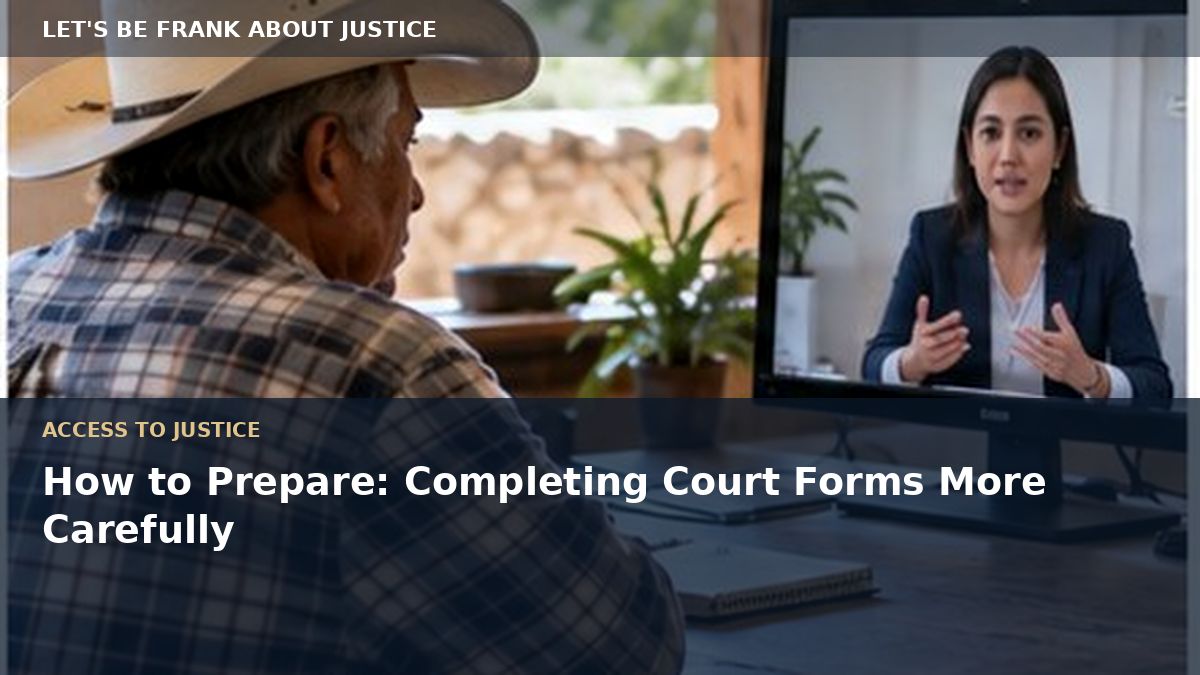
Know the purpose of the appointment or hearing
Write one sentence that answers: “What decision needs to be made today?” That keeps your preparation focused on the issue that matters instead of every disagreement that happened before.
Prepare a short timeline and document index
A one-page timeline and a small, labeled set of records are easier to use than a stack of unsorted papers.
- the current official form and instructions
- existing case caption and case number
- identity and contact information requested by the form
- supporting exhibits named in the instructions
- a copy of the completed form before filing
Practice a three-minute explanation
Use this order: what happened, what document or evidence shows it, what the next deadline is, and what outcome or guidance you are asking for. Avoid interrupting your own explanation with every background detail.
Prepare questions in priority order
If time runs out, you should still get answers to the most important issues.
- Is this the correct form for my court and case type?
- Which fields are required?
- Do I need to attach evidence now or bring it later?
- Can I request a fee waiver?
Plan for the day itself
Confirm location or remote link, arrival time, transportation, childcare, interpreter or accommodation needs, charging cables, and a backup contact method. Save the court or organization phone number somewhere you can access even if your internet fails.
A 30-minute action plan for this issue
- Write down the next deadline, hearing, appointment, or safety concern that applies to your situation.
- Make sure you have the current form for the correct court and case type.
- Put these two items where you can reach them quickly: the current official form and instructions; existing case caption and case number.
- Write this question at the top of your notes: Is this the correct form for my court and case type?
- Choose one starting resource today: official court forms library.
Useful starting points
- official court forms library
- court self-help center
- legal aid
- law library or court navigator program