Accessibility and Language Support: Understanding Court Papers You Receive
People often lose time not because they did nothing, but because they did the wrong task first. The goal of this guide is to help you protect the next important step while you look for qualified help.
This guide focuses on understanding court papers and is written for people who have been served with a summons, complaint, petition, motion, order, or other court document. It is designed to help you prepare, find reliable information, and make better use of legal-help resources. It does not tell you what result you should seek in a specific case.
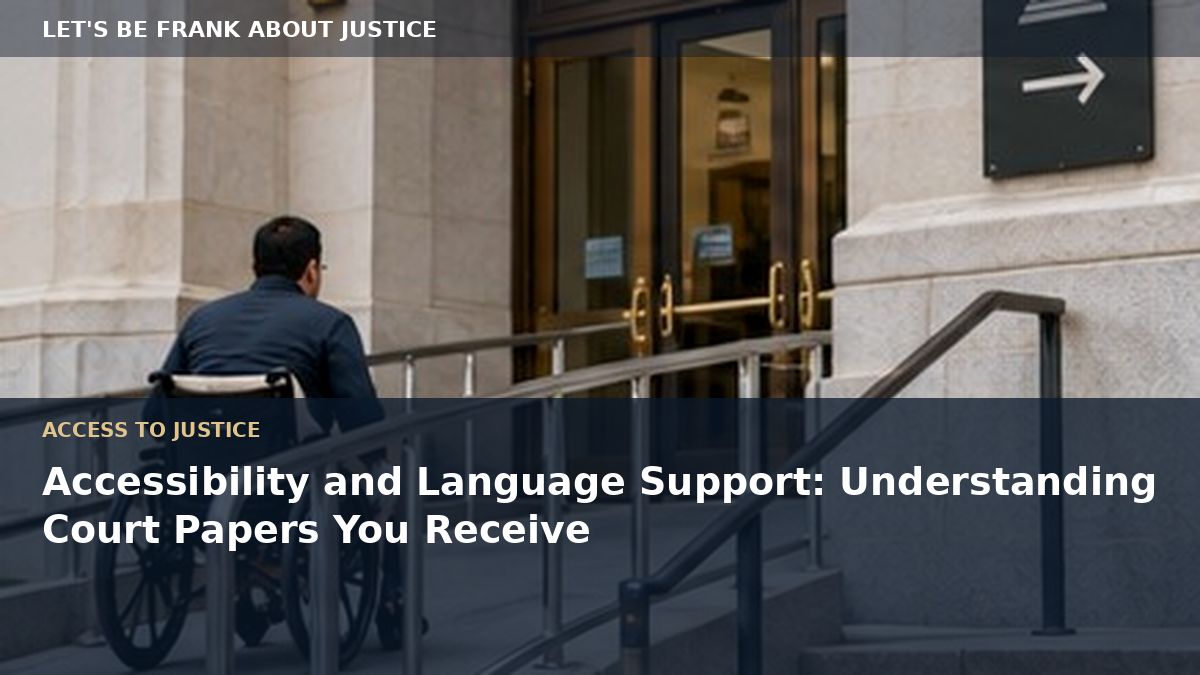
Ask early for the support you need
Interpreter, captioning, mobility, cognitive, communication, scheduling, and other access needs are easier to arrange when the court or program knows about them before the appointment or hearing.
Describe the barrier, not only the diagnosis
Explain what prevents effective participation and what accommodation or language support would help. Courts and programs may have a specific form or coordinator for these requests.
Confirm the arrangement in writing
Keep the approval, interpreter confirmation, remote link, accessible-room information, or alternate-format plan. Bring the contact information for the person who arranged it.
Do not sign what you cannot understand
If language or accessibility barriers prevent you from understanding a document, say so and ask what support is available before signing or waiving rights.
If the accommodation fails
Tell the court or provider immediately and explain how the failure affects your ability to participate. Ask what backup option exists and make a note of whom you contacted and when.
A 30-minute action plan for this issue
- Write down the next deadline, hearing, appointment, or safety concern that applies to your situation.
- Do not ignore the papers even if you think the claim is wrong.
- Put these two items where you can reach them quickly: every page you received; the envelope or service paperwork.
- Write this question at the top of your notes: What document is this and what does it ask me to do?
- Choose one starting resource today: the issuing court’s official website.
Useful starting points
- the issuing court’s official website
- court self-help center
- NCSC self-represented litigant resources
- local legal aid