Finding Free or Low-Cost Help: Understanding Court Papers You Receive
A good self-help resource should reduce uncertainty, not create false confidence. This guide focuses on practical preparation, questions to ask, and the limits of general information.
This guide focuses on understanding court papers and is written for people who have been served with a summons, complaint, petition, motion, order, or other court document. It is designed to help you prepare, find reliable information, and make better use of legal-help resources. It does not tell you what result you should seek in a specific case.
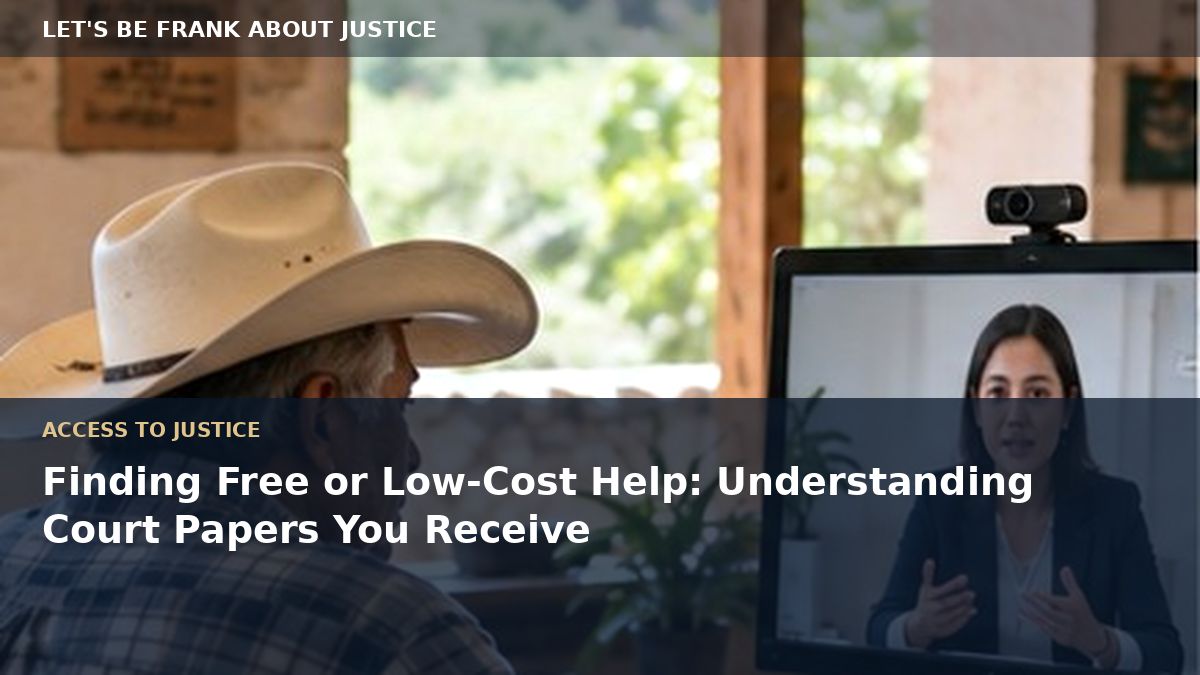
Start with civil legal aid and self-help resources
In the United States, Legal Services Corporation funds local nonprofit civil legal-aid organizations, and LawHelp.org provides state-by-state legal information and referral resources. Court self-help centers may also provide forms, procedural information, and referrals.
Ask for smaller forms of legal help
Full representation is not the only useful option. Depending on location and case type, you may be able to get brief advice, document review, coaching, a clinic appointment, a limited-scope lawyer, or an online pro bono answer.
Make intake calls more effective
Lead with your location, legal issue, and deadline. Have the most important document ready. Ask whether the program serves your county and case type before completing a long intake.
- What document is this and what does it ask me to do?
- What is the exact deadline and how is it calculated?
- Do I need to file a written response before the hearing?
Protect deadlines while you search
Legal-aid programs can have limited capacity. Keep using official court instructions and self-help resources while waiting, and do not assume a pending intake pauses a court deadline.
Trusted starting points
These are starting points, not substitutes for case-specific advice:
- the issuing court’s official website
- court self-help center
- NCSC self-represented litigant resources
- local legal aid
A 30-minute action plan for this issue
- Write down the next deadline, hearing, appointment, or safety concern that applies to your situation.
- Do not ignore the papers even if you think the claim is wrong.
- Put these two items where you can reach them quickly: every page you received; the envelope or service paperwork.
- Write this question at the top of your notes: What document is this and what does it ask me to do?
- Choose one starting resource today: the issuing court’s official website.
Useful starting points
- the issuing court’s official website
- court self-help center
- NCSC self-represented litigant resources
- local legal aid